Información clave para planificar cirugía de vitrectomía en India.
$3,200 desdePrecio más bajo publicado
2–3 hDuración del procedimiento
5 hospitalesOfrecen cirugía de vitrectomía
Cirugía de Vitrectomía en India aparece desde US$3,200 hasta US$3,300 en 5 hospitales. La operación dura 2 a 3 horas. Cada hospital cotiza su propio precio para su caso.
Precios actualizados en may 2010
Costo de Cirugía de Vitrectomía en India
Tabla de precios por tipo de procedimiento, en US$. Cada hospital cotiza su propio precio para su caso.
Procedimiento
Precio mínimo
Precio máximo
Cirugía de Vitrectomía
$3,200
$3,300
Precio desde $3,200 hasta $3,300 · actualizado en may 2010.Cada hospital cotiza el precio final
Hospitales y clínicas que ofrecen Cirugía de Vitrectomía en India
Cirugía de Vitrectomía aparece en 5 hospitales en India. El orden cambia cada hora para que todos tengan la misma visibilidad.
A modern 100 bed hospital opened in 2008, located in Gurgaon, outside of New Delhi.The hospital is a part of the Columbia Asia Group, which has an international patients office able to assist foreign patients with all aspects of medical travel.
Artemis Hospitals aim to provide comprehensive eye care at our Ophthalmology Centre. The state-of-the-art facilities include both diagnostic and therapeutic modalities.
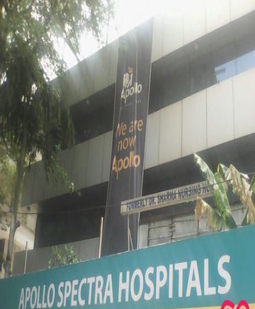
The Department of Ophthalmology at Apollo Spectra Hospital Kailash Colony offers the latest and best in diagnostics and care for patients with vision problems, no matter how simple or complex.
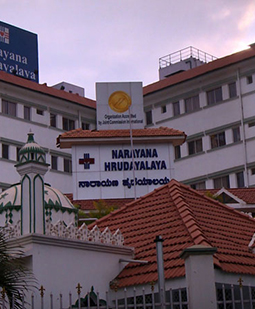
A conglomeration of hospitals in one campus, including: the Sparsh Hospital for Orthopedics & Trauma, the Mazumdar Shaw Cancer Center, the Narayana Hrudayalaya Heart Hospital, the Narayana Nethralaya Eye Hospital, as well as a full fledged multi specialty hospital.
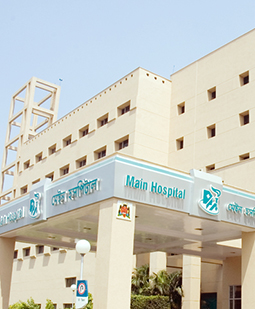
The Apollo Gleneagles Hospital is a medical institution in Kolkata, India. It is an affiliate of Apollo Hospitals, the largest private hospital group in Asia. It provides medical services to both local and international patients.
What is Vitrectomy Surgery?
Vitrectomy surgery is a surgical procedure to remove vitreous gel from the eye. Vitrectomy surgery is often the first step in an eye surgery procedure and is carried out to repair retinal detachment, repair extensive tears in the retina, treat proliferative retinopathy, clear severe cases of vitreous floaters, repair a macular pucker, or as part of the procedure to treat diabetic retinopathy. Vitrectomy surgery is also used to clear blood in the vitreous gel if it fails to clear naturally.
How is Vitrectomy Surgery carried out?
The surgeon makes small cuts in the vitreous gel and suctions the gel from the eye.
After the vitreous gel has been removed the surgeon will continue to treat the retina to repair the underlying eye condition.
The surgeon refills the eye with solution or a gas bubble to retain the eye’s pressure and keep the retina in place.
What surgeon performs Vitrectomy Surgery?
Vitrectomy surgery is carried out by a specialist eye doctor (Ophthalmologist).
Acerca de Cirugía de Vitrectomía
Datos clave para planificar su tratamiento: cuánto dura, la estancia en el hospital, la anestesia, los riesgos y la recuperación.
Duración de la cirugía/tratamiento
2 to 3 hours.
Días de hospitalización
Vitrectomy surgery is normally carried out on an outpatient procedure, with no overnight stay required.
Anestesia
Usually general anesthesia, but local anesthesia may also be used.
Recuperación
- Patients usually resume normal activities after 1 or 2 days, although should avoid strenuous activities or those that put pressure on the eye.
- Full recovery usually occurs 6 weeks after the surgery.
Riesgos
- Elevated eye pressure (glaucoma).
- Loss of vision or blurring of vision.
- Swelling, red or painful eyes.
- Infection.
- Retinal detachment.
- Fluid build-up in the eye’s clear covering.
- Cataract.
Cuidados posteriores
- Use eye drops to minimize infection and promote healing.
- Avoid heavy lifting and air travel until the eye has sufficiently healed.
- If a gas bubble has been used, you will need to position your head in a specific way to maintain the retina’s position.
- Take pain killers and apply ice compresses to alleviate pain.

 Private Hospital

 JCI
 ISO