A modern 100 bed hospital opened in 2008, located in Gurgaon, outside of New Delhi.The hospital is a part of the Columbia Asia Group, which has an international patients office able to assist foreign patients with all aspects of medical travel.
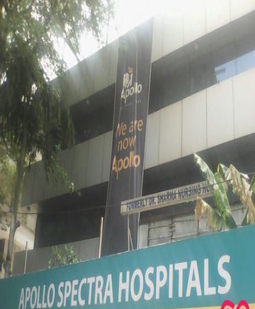
The Department of Ophthalmology at Apollo Spectra Hospital Kailash Colony offers the latest and best in diagnostics and care for patients with vision problems, no matter how simple or complex.
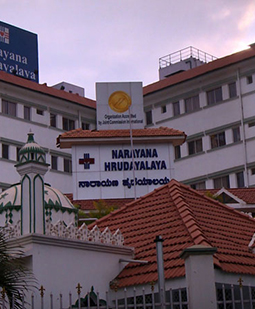
A conglomeration of hospitals in one campus, including: the Sparsh Hospital for Orthopedics & Trauma, the Mazumdar Shaw Cancer Center, the Narayana Hrudayalaya Heart Hospital, the Narayana Nethralaya Eye Hospital, as well as a full fledged multi specialty hospital.
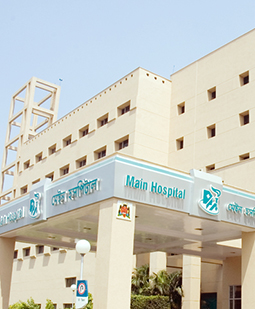
The Apollo Gleneagles Hospital is a medical institution in Kolkata, India. It is an affiliate of Apollo Hospitals, the largest private hospital group in Asia. It provides medical services to both local and international patients.
What is Pneumatic Retinopexy?
Pneumatic retinopexy is a procedure to repair several kinds of retinal detachments.
How is the Surgery Performed?
Gas bubble is injected into the center of the eyeball.
The patient’s head is positioned in a way to enable the gas bubble to float to the area that is detached, and it fixes against the detachment.
Fluid is pumped out from the underneath the flattened retina.
A freezing probe known as cryopexy or laser probe known as photocoagulation is used to seal the retinal opening.
The bubble helps the retina to flatten for one to three weeks, after which a seal is formed between the retina and the eye wall.
The gas bubble is gradually absorbed by the eye.
Pneumatic retinopexy can also be done using a large silicone oil bubble instead of a gas bubble. Since the silicon oil is not absorbed, after the detachment of the retina is healed a procedure is used to remove the oil.
Acerca de Retinopexia Neumática
Datos clave para planificar su tratamiento: cuánto dura, la estancia en el hospital, la anestesia, los riesgos y la recuperación.
Días de hospitalización
The procedure is usually done as an outpatient procedure.
Anestesia
Local anesthesia
Recuperación
The patient will take about 3 weeks to recover.
Riesgos
- Proliferative vitreoretinopathy (PVR), i.e. retina scarring that may cause retinal detachment again.
- New breaks and tears
- More surgeries may be required to reattach the retina.
- The fluid under the retina may persist and take a lot of time to be absorbed.
- Small bubbles may be trapped beneath the retina.
Other rare complications include:
- Macula detachment affecting central vision
- Choroid detachment
- A rise in pressure inside the eye
- Vitreous hemorrhage
- Subretinal hemorrhage
Cuidados posteriores
- For 1 to 3 weeks after the procedure, the patient must keep the head and eye positioned properly for 16 to 21 hours a day.
- The patient should avoid lying back to prevent the bubble from moving to the front of the eye and pressing against the lens.
- Airplane travel should be strictly avoided as the gas bubble may expand and the pressure inside the eye may increase.
The doctor should be informed if the following symptoms occur:
- Rise in pain and redness
- Diminishing vision
- Swelling around the eye
- Discharge from the eye
- Any vision problems

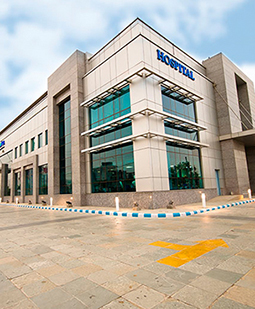 Private Hospital

 JCI
 ISO