Información clave para planificar implante coclear en India.
$30,000 desdePrecio más bajo publicado
2 hDuración del procedimiento
11 hospitalesOfrecen implante coclear
Implante Coclear en India aparece desde US$30,000 hasta US$31,000 en 11 hospitales. La operación dura 2 horas. Cada hospital cotiza su propio precio para su caso.
Precios actualizados en may 2010
Costo de Implante Coclear en India
Tabla de precios por tipo de procedimiento, en US$. Cada hospital cotiza su propio precio para su caso.
Procedimiento
Precio mínimo
Precio máximo
Implante Coclear
$30,000
$31,000
Precio desde $30,000 hasta $31,000 · actualizado en may 2010.Cada hospital cotiza el precio final
Hospitales y clínicas que ofrecen Implante Coclear en India
Implante Coclear aparece en 11 hospitales en India. El orden cambia cada hora para que todos tengan la misma visibilidad.
A 200-bed facility located at Gateway Center in Northwest Bangalore. The hospital opened in 2008 and provides comprehensive tertiary-level services, such as cardiac operations, orthopedics and neuroscience, as well as secondary-level medical care.
The flagship hospital of the Global Hospitals Group, which operates eight hospitals throughout India. The modern 500 bed hospital was opened in 2009, and offers advanced medical and surgical treatment, including organ transplantation, cardiac surgey and neurosurgy.
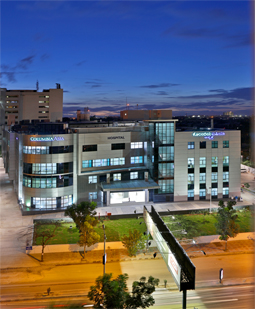
A modern 100 bed hospital opened in 2008, located in Gurgaon, outside of New Delhi.The hospital is a part of the Columbia Asia Group, which has an international patients office able to assist foreign patients with all aspects of medical travel.
SevenHills Group of Hospitals (SHHL) has been delivering Healthcare services at the highest level, since past 25 years. SevenHills Hospital, Mumbai, is a world class integrated Healthcare Delivery System, that provides comprehensive Healthcare...
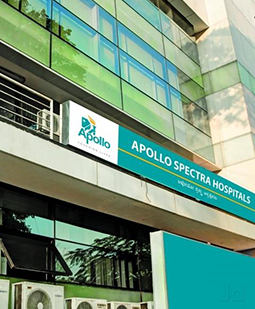
Highly qualified ENT specialists at Apollo Spectra provide comprehensive out-patient care, utilising their years of experience along with state-of-the-art technology to determine the nature of your problem and create a treatment plan specifically designed for your ENT conditions.
The Department of ENT of the Apollo Spectra Hospital Kailash Colony envisions itself as the premiere referral center in the country, providing the highest quality service to the needs of the people and responsive to advances in sciences and education.
Apollo Bangalore is a modern, JCI accredited, multi-specialty hospital, capable of treating the most complex medical cases, including neurosurgy, bone marrow transplants, oncology and cardiac surgery. Apollo provides a full range of services for foreign patients.
Fortis Flt. Lt. Rajan Dhall Hospital is a Centre of Excellence for Cardiac Sciences, Renal Sciences, Diabetology, Pulmonology and Thoracic Sciences and a specialty center for Joint Replacement, Genito-urinary, Cosmetic Surgery and Dental care.
What is a Cochlear Implant?
A cochlear implant is an intricate, medical electronic device that is surgically implanted behind the ear to treat hearing loss. A cochlear implant improves hearing by representing sounds better. Patients may not get back normal hearing but they will be able to hear sounds more clearly and will have an improved understanding of speech in environments filled with noise.
How does the Cochlear Implant work?
A cochlear implant consists of internal parts that are implanted beneath the skin and external parts that are worn by the patient. The external part has a speech processor that helps in creating the sensation of sound. The external microphone and processor gathers the sounds in the environment and converts them into electrical impulses.
The cochlear implant sends impulses to the auditory nerve that transmits the signals to the brain. It can bypass the nonfunctional portions of the ear and provide a direct stimulation to the auditory nerve. These signals are then transmitted by the auditory nerve to the brain that perceives the signals as sound.
A cochlear implant does not increase the volume of sound like a hearing aid but it boosts the nervous reaction to sound.
How is the Cochlear Implant surgery performed?
The area behind the ear is shaved and sterilized.
A two to three inch incision is made. This leads to the opening in the mastoid bone and into the middle ear.
The receiver-stimulator part of the cochlear implant is place on a depression that is made on the bone.
The device is kept in place with an enduring suture.
Through the opening in the mastoid bone, another opening is created in the cochlea to implant the electrodes.
The electrode is carefully and very slowly placed through this opening. The structure of electrode is designed to arrange the electrodes very close to the ganglion cells to allow the electrical signals.
When the device is fitted in place, it is tested and the incision is closed with absorbable sutures.
How to prepare for the Cochlear Implant procedure?
The patient may need to go through certain medical tests such as:
Thorough examination of the ear
Audiogram
Hearing aid evaluation
Physical examination
General anesthesia preparation
Psychological test to determine if the patient can deal with the implant
Datos clave para planificar su tratamiento: cuánto dura, la estancia en el hospital, la anestesia, los riesgos y la recuperación.
Duración de la cirugía/tratamiento
Approximately 2 hours.
It may take longer for younger children due to the small size of their middle ear structures.
Días de hospitalización
For adult and adolescent patients, the cochlear implant surgery is conducted as an outpatient procedure.
Children, however, may require a one-night-stay at the hospital.
Anestesia
General anesthesia
Recuperación
- A bandage around the head needs to be worn during sleep for some time after the surgery.
- The external parts are fitted about one month after surgery when the surgery site has healed. The device is then turned on and mapped, which involves adjusting the speech processor and fixing the stimulation level for each electrode.
- The patient needs to be trained in interpreting sounds that are heard through the cochlear implant for many day or even years.
- Some patients may experience sound sensations that are mechanical or synthetic for a few weeks.
Riesgos
- Damage to the nerves that causes facial paralysis and taste disturbance
- Dizziness and balance related problems
- Leakage of cerebrospinal fluid
- Tinnitus
- Loss of residual hearing
- Failure of the device to work
- Infection
- Meningitis
Cuidados posteriores
- Patients who require an MRI may need to remove the magnet in the cochlear implant.
- Care should be taken not to get the external cochlear implants wet. They should be removed before showering, bathing or swimming.
- If the device fails, surgery is required to solve the problem.

 Private Hospital






 JCI

 ISO