Información clave para planificar cirugía de extirpación de callos en España.
$2,800 desdePrecio más bajo publicado
15–30 minDuración del procedimiento
7 hospitalesOfrecen cirugía de extirpación de callos
Cirugía de Extirpación de Callos en Madrid aparece desde US$2,800 hasta US$4,500 en 7 hospitales. La operación dura 15 a 30 minutos. Cada hospital cotiza su propio precio para su caso.
Precios actualizados en jul 2019
Costo de Cirugía de Extirpación de Callos en España
Tabla de precios por tipo de procedimiento, en US$. Cada hospital cotiza su propio precio para su caso.
Procedimiento
Precio mínimo
Precio máximo
Cirugía de Extirpación de Callos
$2,800
$4,500
Precio desde $2,800 hasta $4,500 · actualizado en jul 2019.Cada hospital cotiza el precio final
Hospitales y clínicas que ofrecen Cirugía de Extirpación de Callos en Madrid
Cirugía de Extirpación de Callos aparece en 7 hospitales en Madrid. El orden cambia cada hora para que todos tengan la misma visibilidad.
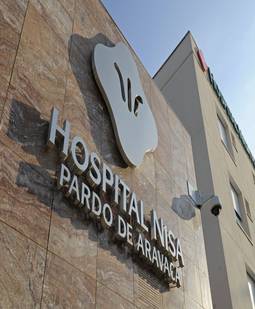
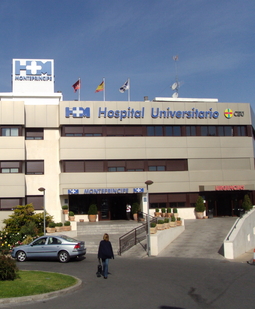
A modern (opened in 2007), general, private hospital located in Madrid, part of the NISA group of hospitals. The international patients department can assist patients with accomodation and trasportation, and can communicate in English as well as in Spanish.
Our team of professionals is specialized in Orthopaedic Surgery and Traumatology. With an extensive experience, we will study your particular case and will give you the best surgical and recovery solution. We use the most innovate technics in order to provide our patients with the best solution.
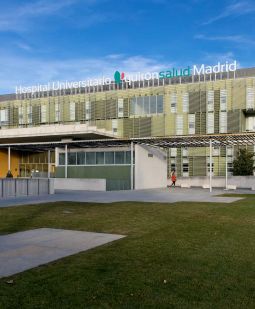
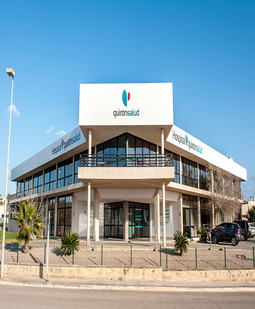
An ISO certified modern private hospital, which was opened in 2006, and is part of the Quironsalud Hospital Group. This tertiary care hospital has certified medical specialties capable of treating the most complicated medical cases.
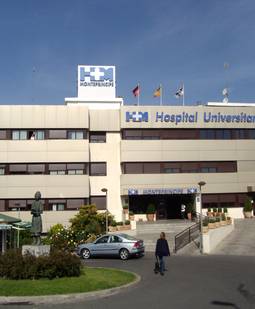
HM Hospitales is a hospital group with six private hospitals in Madrid: three general hospitals, a cardiovascular hospital, an oncological center and a women's health hospital.
Our department is one of the most qualified orthopaedic programs and fully equipped to treat each and every orthopaedic and rheumatologic condition, injury, or disorder.
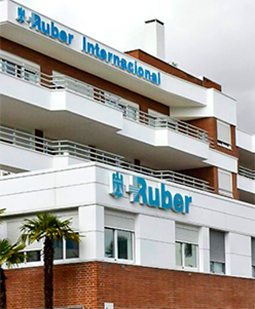
Hospital Ruber Internacional provides advanced care for every musculoskeletal condition, from complex fractures and sports injuries to spinal deformities, such as scoliosis, and neuromuscular disorders, such as cerebral palsy.
Some of the major achievements of Quirónsalud specialists include surgery for total wrist replacement and use of AI and virtual reality for surgical procedures to correct bowleggedness.
What is Corn Removal Surgery?
Corn removal surgery is a surgical procedure that is done if the patient is suffering from unbearable pain due to a corn, which has not been cured by medication and home remedies. Corn removal surgery is very effective in stopping the corn from recurring as it helps in removing pressure and friction that cause corns.
How is Corn Removal Surgery Performed?
Corn removal surgery may be performed to remove hard corns (Heloma Durum) or soft corns (Heloma Molle).
Hard Corns
A corn removal surgery is performed to remove a hammertoe that causes corns. The painful corns and hammertoe deformities are usually surgically removed by digital arthroplasty and arthrodesis.
During arthroplasty, a piece of the bone within the proximal or distal interphalangeal joints is removed.
This helps in straightening the toe after which the enlarged bone beneath a corn can be removed.
The procedure of arthrodesis is similar to arthroplasty; however, instead of removing the bone, the two bones are joined together.
Arthrodesis may result in a rigid toe, but the recurrence of corns will be reduced.
Apart from arthroplasty and arthrodesis, the tendon may be lengthened to loosen the metatarsophalangeal joint, which totally removes the hammertoe distortion.
Soft Corns
Soft corns are similar to hard corns but they are a result of pressure between two toes instead of an external pressure caused by a shoe.
An arthroplasty is performed, during which a piece of the bone within the proximal or distal interphalangeal joints is removed.
This helps in removing the enlarged bone beneath a corn.
In cases of recurrent soft corns with prior unsuccessful surgeries, a syndactylization procedure is performed.
This is done by stitching the skin at the bottom of the two toes together, which forms a partial web at the toes.
How to Prepare for Corn Removal Surgery?
The doctor should be informed if the patient has any ailments or medical conditions.
The doctor should be informed about any medication that the patient is taking with or without a prescription.
The patient is advised to stop smoking to ensure a quick recovery.
Acerca de Cirugía de Extirpación de Callos
Datos clave para planificar su tratamiento: cuánto dura, la estancia en el hospital, la anestesia, los riesgos y la recuperación.
Duración de la cirugía/tratamiento
15 to 30 minutes
Días de hospitalización
Corn removal surgery is usually done as an outpatient procedure.
Anestesia
Local Anesthesia
Recuperación
- The patient will feel mild pain for 2 to 3 days after the surgery. Pain medication will be provided to control the pain.
- The surgical stitches will be removed in 10 to 14 days after the surgery.
- The patient will take approximately 3 to 4 weeks to recover from the surgery and return to normal activities.
Riesgos
- Excessive swelling
- Healing delay
- Recurrence of the corn if the sufficient amount of bone is not removed
- Limp toe for a few weeks
Cuidados posteriores
- The patient should avoid using the foot after surgery and should keep the foot elevated to a level above the heart for a minimum of three days.
- The patient should limit using the foot for 2 to 3 weeks, and should not walk barefoot for 3 weeks after the surgery.
- The patient is required to wear surgical sandals for approximately 3 weeks or until the swelling is reduced. Not wearing it may result in swelling, infection and delayed healing.

 Private Hospital
 ISOPrecio a consultar
 JCI