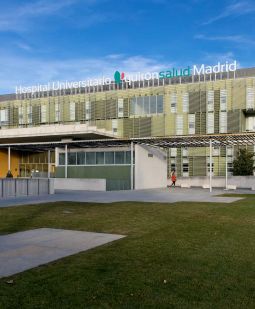
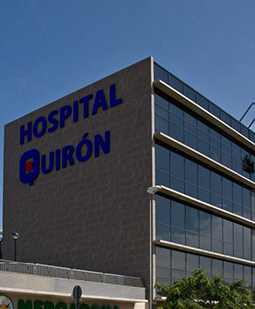
With more than 36 medical specialties, 200 physicians and surgeons of the highest level, Quironsalud Hospital Malaga is one of the most pertinent hospitals in Spain.
Our Orthopaedic, Trauma and Sports Medicine Department has a great human team to offer you the best, up-to-the-minute techniques to treat any kind of musculoskeletal system condition.
Our team of professionals is specialized in Orthopaedic Surgery and Traumatology. With an extensive experience, we will study your particular case and will give you the best surgical and recovery solution. We use the most innovate technics in order to provide our patients with the best solution.
This international hospital incorporates prestigious doctors, invests in research and development, technology and continuing education that enhances skills, in facilities, and in an increased operational efficiency in order to provide nothing but the best
An ISO certified modern private hospital, which was opened in 2006, and is part of the Quironsalud Hospital Group. This tertiary care hospital has certified medical specialties capable of treating the most complicated medical cases.
Some of the major achievements of Quirónsalud specialists include surgery for total wrist replacement and use of AI and virtual reality for surgical procedures to correct bowleggedness.
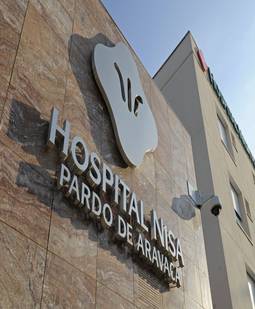
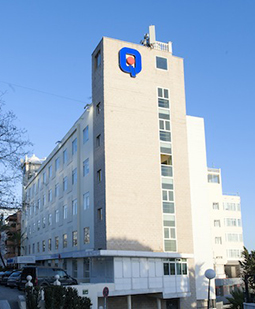
A modern (opened in 2007), general, private hospital located in Madrid, part of the NISA group of hospitals. The international patients department can assist patients with accomodation and trasportation, and can communicate in English as well as in Spanish.
Orthopaedic medicine provides highly specialized evaluation and treatment of the entire musculoskeletal system including bones, ligaments, tendons, joints, muscles and nerves — everything that allows you to move, work and be active.
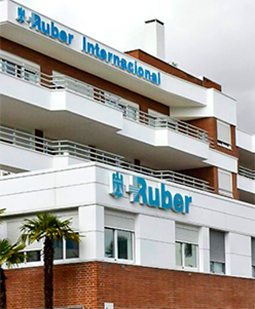
Hospital Ruber Internacional provides advanced care for every musculoskeletal condition, from complex fractures and sports injuries to spinal deformities, such as scoliosis, and neuromuscular disorders, such as cerebral palsy.
PreciosArthroscopic Surgery a consultarArthroscopic Surgery a consultarArthroscopic Surgery a consultarArthroscopic Surgery a consultarArthroscopic Surgery a consultar
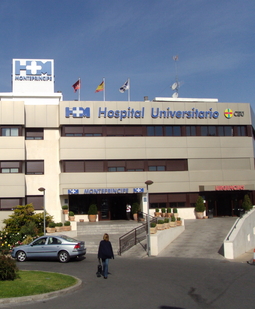
Our department is one of the most qualified orthopaedic programs and fully equipped to treat each and every orthopaedic and rheumatologic condition, injury, or disorder.
What is Arthroscopic Surgery?
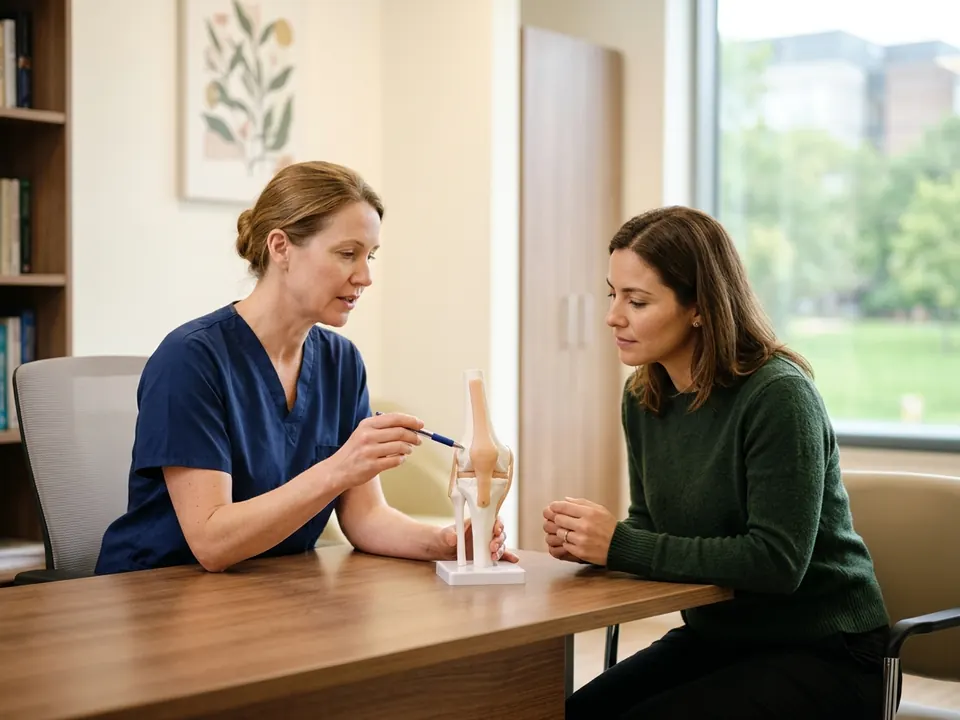
Arthroscopic surgery is a surgical procedure in which an arthroscope and other surgical instruments are inserted through tiny incisions in the skin to examine and treat the interior formation of a joint for various problems.
The arthroscope is an endoscopic device with a camera attached to it, which enables the orthopedic surgeon to view the internal structures. The arthroscope is of various sizes and a joint is examined with an arthroscope that is suited to its size.
The different types of arthroscopic surgeries are:
A small incision is made on the side of the joint that needs to be treated through which the arthroscope is inserted.
Other tiny incisions are made through which surgical instruments are inserted.
These instruments are used to cut, remove and stitch injured tissues.
After the surgery is completed, the arthroscope is withdrawn and the incision is closed with sutures.
A dressing is used to cover the incision area and a brace may be used to wrap around the joint.
How to Prepare for Arthroscopic Surgery?
The patient is physically examined before the surgery.
The patient is required to do some blood and urine tests.
The doctor should be informed about any medication that the patient may be taking.
Certain medication that the patient has been taking may be stopped two weeks before the surgery.
The doctor should be informed about any medical conditions or ailments of the patient.
The doctor should be informed if the patient has been drinking more than one or two drinks of alcohol in a day.
The patient should stop smoking some weeks prior to the surgery to recover quickly.
Acerca de Cirugía Artroscópica
Datos clave para planificar su tratamiento: cuánto dura, la estancia en el hospital, la anestesia, los riesgos y la recuperación.
Días de hospitalización
Arthroscopic surgery is usually done as an outpatient procedure.
Anestesia
The type of anesthesia is chosen depending on the joint that is being treated and the health of the patient.
Recuperación
- The patient is taken to a recovery room until the patient comes out of the effects of anesthesia.
- Pain medication may be given to the patient.
- The surgical incisions are small and heal quickly.
- The patient is required to rest for several days after the surgery and keep the joint elevated.
- Ice packs may be applied to minimize swelling and pain.
- The patient is required to undergo an exercise program that helps in strengthening the patient’s muscles. This also prevents contracture of the surrounding tissues.
Riesgos
The risks that may occur in arthroscopic surgery are rare. They include the following:
- Infection
- Severe bleeding
- Swelling
- Blood clotting
- Injury to nerve and blood vessels
- Breakage of surgical instruments during the surgery
Cuidados posteriores
- The incision area should be kept clean and dry.
- The surgeon or nurse will remove the surgical bandages.
- The doctor’s instructions should be followed carefully.
- The patient may be required to undergo physical therapy.
Any signs of infection should be reported to the doctor. These include:
- Severe joint pain
- Swelling
- Redness
- Bleeding
- Warmth
 Private Hospital

 JCI
 ISO