Información clave para planificar bypass de corazón en Alemania.
$33,500 desdePrecio más bajo publicado
2–6 hDuración del procedimiento
4–7 díasEstancia hospitalaria
4 hospitalesOfrecen bypass de corazón
Bypass de Corazón en Alemania aparece desde US$33,500 hasta US$56,000 en 4 hospitales. La operación dura 2 a 6 horas, con 4 a 7 días de hospitalización. Cada hospital cotiza su propio precio para su caso.
Precios actualizados en jul 2012
Costo de Bypass de Corazón en Alemania
Tabla de precios por tipo de procedimiento, en US$. Cada hospital cotiza su propio precio para su caso.
Procedimiento
Precio mínimo
Precio máximo
Bypass de Corazón
$33,500
$56,000
Precio desde $33,500 hasta $56,000 · actualizado en jul 2012.Cada hospital cotiza el precio final
Hospitales y clínicas que ofrecen Bypass de Corazón en Alemania
Bypass de Corazón aparece en 4 hospitales en Alemania. El orden cambia cada hora para que todos tengan la misma visibilidad.
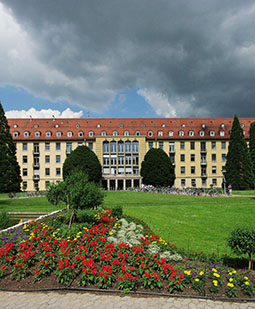
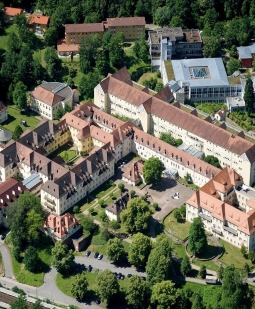
Established in 1884, the University Medical Center Hamburg-Eppendorf underwent full modernization in 2009 and emerged as the most innovative European hospital. Its dedicated International Office supports roundabout 1,000 foreign patients a year.
The University Medical Center Freiburg is one of the largest medical facilities in Europe and part of the Albert Ludwigs University Freiburg, one of five outstanding centers of academic excellency in Germany.
One of Germany's largest hospitals, made up of more than 50 clinics and specialist institutes spanning all medical specialties. Kinikum Stuttgart is regarded as one of the best hospitals in Germany, and is a referral center for oncology, ENT, pediatrics and more.
Heidelberg University Hospital is one of Europe`s leading medical centers. World-renowned experts provide comprehensive care of the highest international standards in all medical specialties.
Bypass surgery, also called coronary artery bypass graft (CABG) surgery, is a surgical procedure performed to relieve angina and reduce the risk of death from coronary artery disease.
Arteries or veins are grafted from different parts of the patient's body to the coronary arteries in order to bypass the atherosclerotic narrowings and improve the blood supply to the coronary circulation supplying the heart muscle.
This surgery is usually performed with the heart stopped, necessitating the usage of cardiopulmonary bypass.
Bypass surgery is the most common major surgery in the USA, with over 500,000 surgeries performed anually.
New techniques for CABG:
- OCABG (off-pump CABG), is a technique to perform CABG on a beating heart.
- MICABG (minimally invasive CABG) is a technique where the incision is smaller, reducing some of the risks of this surgery.
Acerca de Bypass de Corazón
Datos clave para planificar su tratamiento: cuánto dura, la estancia en el hospital, la anestesia, los riesgos y la recuperación.
Duración de la cirugía/tratamiento
2-6 hours, depending on the number of bypasses to be performed.
Días de hospitalización
Usually 4-7 days (3-4 days in case of a minimally invasive CABG)
Anestesia
General anesthesia
Recuperación
You might be able to move around a few days after the surgery, according to your status and the doctor's advice.
Usually you will be able to get back to work within 12 weeks.
Riesgos
Between 2-5% of patients have some sort of complications.
As with any surgical procedure, there are risks of infection and heavy bleeding, as well as risks associated with general anesthesia.
Cuidados posteriores
Información próximamente. Pida una consulta para recibir orientación personalizada sobre la recuperación. Pedir presupuesto →

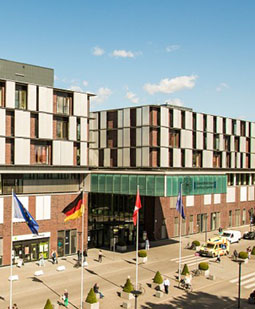 University Hospital
 ISOPrecio a consultar