Información clave para planificar vasectomía en Tailandia.
$350 desdePrecio más bajo publicado
20–30 minDuración del procedimiento
5 hospitalesOfrecen vasectomía
Vasectomía en Tailandia aparece desde US$350 hasta US$500 en 5 hospitales. La operación dura 20 a 30 minutos. Cada hospital cotiza su propio precio para su caso.
Precios actualizados en mar 2010
Costo de Vasectomía en Tailandia
Tabla de precios por tipo de procedimiento, en US$. Cada hospital cotiza su propio precio para su caso.
Procedimiento
Precio mínimo
Precio máximo
Vasectomía
$350
$500
Precio desde $350 hasta $500 · actualizado en mar 2010.Cada hospital cotiza el precio final
Hospitales y clínicas que ofrecen Vasectomía en Tailandia
Vasectomía aparece en 5 hospitales en Tailandia. El orden cambia cada hora para que todos tengan la misma visibilidad.
At the Urology Center, we don’t simply practice medicine, we endeavor to provide you with the most effective, least invasive procedures in a pleasant environment which is favorable to good health.
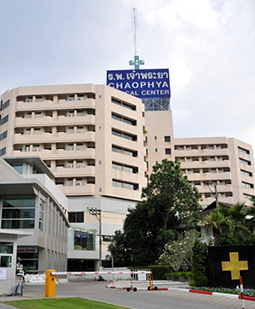
The Chaophya Hospital is a JCI accredited, tertiary private hospital in Bangkok, Thailand, which has been in operation since 1991. It has an international department which offers a comprehensive range of supporting services to foreign patients.
A JCI accredited hospital with a 225 in-patient bed capacity which offers a wide range of medical services. Services for international patients include aesthetic procedures and cosmetic surgery.
This secondary health care facility is a part of the Bangkok Hospital Group. It is located in Koh Samui. It has a 50 in-patient bed capacity and serves locals and international patients alike.
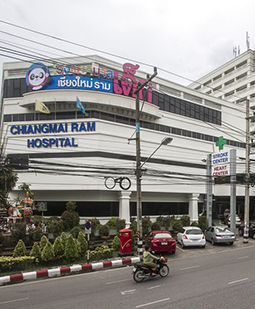
Being established in 1993, this tertiary private medical institution offers a wide range of medical care services. It has 350 in-patient bed capacity and is accredited by the Hospital Accreditation of Thailand.
What is Vasectomy?
Vasectomy is a surgical procedure to cut, clamp or seal the vas deferens. The vas deferens is the tube through which sperm passes from the scrotum to the urethra. The urethra is the tube through which sperm and urine pass out of the penis.
Vasectomy causes sperm to be blocked inside the testes, and therefore sperm is not released during ejaculation. It is a permanent birth control method.
However, sperm decrease may be gradual after a vasectomy. Couples may be required to continue using birth control measures to avoid pregnancy until the semen sample detects no sperms.
How is Vasectomy Performed?
Vasectomy may be performed in three ways:
No-Scalpel Vasectomy, also called Key-Hole Vasectomy
The surgeon locates the vas deferens by sensing the scrotum.
A numbing medication is given to the patient.
The surgeon makes a tiny hole in the scrotum using a sharp hemostat instead of a scalpel.
The surgeon may pull the vas deferens through the small hole to tie it or cut it.
Stitches are not required, and the incision heals quickly.
Open-Ended Vasectomy
The patient’s scrotum is shaved and cleaned.
A numbing medication is given into the area.
A small surgical cut is made in the upper part of the scrotum.
The vas deferens is tied and cut.
The testicular end of the vas deferens is not sealed. This allows sperm to stream continuously into the scrotum.
The incision is closed using stitches or skin glue.
Open-ended vasectomy may prevent pressure in the epididymis and testicular pain caused by back pressure.
Vas-Clip Vasectomy
The patient’s scrotum is shaved and cleaned.
A numbing medication is given into the area.
A small surgical cut is made in the upper part of the scrotum.
The vas deferens is squeezed shut with a clip to stop the flow of sperm.
The incision is closed using stitches or skin glue.
How to Prepare for Vasectomy?
Certain medication that the patient is taking may be stopped two weeks before the surgery.
The doctor should be informed about any medication that the patient is taking with or without a prescription. These may include supplements or herbs or drugs.
The doctor should be informed if the patient has any ailments or medical conditions.
On the day of the surgery, the patient should wear loose and comfortable clothing.
A scrotal support may be required after the surgery.
Acerca de Vasectomía
Datos clave para planificar su tratamiento: cuánto dura, la estancia en el hospital, la anestesia, los riesgos y la recuperación.
Duración de la cirugía/tratamiento
20 to 30 minutes
Días de hospitalización
Vasectomy is usually done as an outpatient procedure.
Anestesia
Local anesthesia
Recuperación
- Patients can go home on the same day after the procedure.
- Patients can resume work in two to three days.
- Patients can resume normal physical activities in three to seven days.
- Scrotum swelling and bruising remains for about two weeks
- Patients need to wear scrotal support for three to four days
Riesgos
- Swelling
- Infection
- Prolonged pain
- Bleeding
- Sperm granuloma, which is a lump caused by sperm leakage into the surrounding tissue
- Congestive epididymitis, which is inflammation of the vas deferens
- Recanalization, which is a condition in which the vas deferens may grow back (rare)
Cuidados posteriores
- Patients can use an ice pack to reduce swelling.
- Pain medication may be used to ease the pain.
- Patients should wear comfortable underwear after vasectomy.
- Patients should avoid lifting heavy objects for a week after vasectomy.
- Patients may experience mild aching during sexual arousal for a few months after vasectomy.
- Sexual intercourse should be avoided for a week after vasectomy.

 Private Hospital
 JCI
 Thai HA
 ISO