Información clave para planificar extirpación de quiste ovárico en Turquía.
$1,800 desdePrecio más bajo publicado
1–4 hDuración del procedimiento
1–5 díasEstancia hospitalaria
6 hospitalesOfrecen extirpación de quiste ovárico
Extirpación de Quiste Ovárico en Istanbul aparece desde US$1,800 hasta US$2,100 en 6 hospitales. La operación dura 1 a 4 horas, con 1 a 5 días de hospitalización. Cada hospital cotiza su propio precio para su caso.
Precios actualizados en oct 2019
Costo de Extirpación de Quiste Ovárico en Turquía
Tabla de precios por tipo de procedimiento, en US$. Cada hospital cotiza su propio precio para su caso.
Procedimiento
Precio mínimo
Precio máximo
Extirpación de Quiste Ovárico
$1,800
$2,100
Precio desde $1,800 hasta $2,100 · actualizado en oct 2019.Cada hospital cotiza el precio final
Hospitales y clínicas que ofrecen Extirpación de Quiste Ovárico en Istanbul
Extirpación de Quiste Ovárico aparece en 6 hospitales en Istanbul. El orden cambia cada hora para que todos tengan la misma visibilidad.
Our hospital is a leading medical facility in Turkey, with highly specialized doctors, advanced technology, and 40+ procedures. Our facility has 200 beds, 81 doctors, and 50 ICU units. We prioritize patient well-being with VIP services, including hotel stays, checkups, and transportation. Our focus
Liv Hospital is the only institution in Turkey co-authorized Center of Excellence Accreditation in colorectal surgery, robotic surgery and bariatric surgery by the Surgical Review Corporation (SRC) and provides advanced technology and treatments to its international patients with its 159 bed capacit
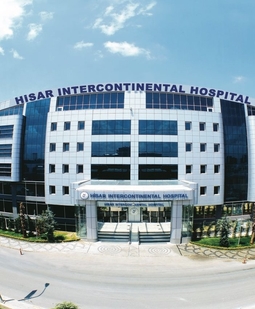
Hisar Intercontinental Hospital is a JCI accredited facility that provides the highest quality of care for all its patients. The hospital is one of Turkey’s largest private hospitals and utilizes the best and most up-to-date technologies in its 170 bed facility.
Kadıköy Florence Nightingale Hospital provides services in all specialties with its inpatient and outpatient, diagnosis, treatment and emergency service facilities and fully-equipped polyclinics.
What is Ovarian Cyst Removal?
Ovarian cyst removal is a medical procedure for removing cysts that are formed in the ovaries.
Most ovarian cysts disappear without treatment. Some cysts in the ovaries may be treated with medication using birth control pills. This stops ovulation which stops new cysts from developing.
Ovarian cysts that do not disappear on their own or those that are 5 to 10 centimeters in size may be removed by surgery to ensure that the cyst is not cancerous. Surgery may also be needed if some patients who are menopausal. Surgery to remove an ovarian cyst may be done by a Cystectomy without removing the ovary. If cancer is found, the ovaries may be removed by performing an Oophorectomy.
How is Ovarian Cyst Removal Surgery Performed?
Surgery to remove ovarian cysts may be performed either by laparotomy or by a laparoscopic method.
Laparotomy: Laparotomy or open surgery is done if the ovarian cyst is very large and in cases of cancer. A large incision is made in the patient’s abdomen during laparotomy that enables the surgeon to view and examine the area closely. The blood vessels are clamped and the cyst is removed. If the cyst is ruptured, the deposits from the cysts are extracted from the abdomen. A biopsy will be performed on the removed cyst.
Laparoscopy: Laparoscopy is used to remove ovarian cysts in a less invasive way. Laparoscopic surgery involves the use of a laparoscope that is inserted through a small incision below the navel. A laparoscope is an endoscopic tube with a camera and light attached to it. Other tiny incisions are also made through which surgical instruments are inserted to remove the ovarian cyst.
How to Prepare for Ovarian Cyst Removal?
The patient is required to do some tests, and will be physically examined by the doctor.
The patient may be required to stop taking certain medication a week before the surgery.
The doctor should be informed about any ailment or medical conditions of the patient.
Acerca de Extirpación de Quiste Ovárico
Datos clave para planificar su tratamiento: cuánto dura, la estancia en el hospital, la anestesia, los riesgos y la recuperación.
Duración de la cirugía/tratamiento
1 to 4 hours
Días de hospitalización
1 to 5 days
Anestesia
General Anesthesia
Recuperación
- Recovery is faster in the case of laparoscopy and patients can resume normal activities in a day or two. After a laparotomy, the patient can return to normal activities in 4 to 6 weeks.
- The patient will feel some pain and discomfort after the surgery. Antibiotics may be provided to prevent an infection and pain medication will be prescribed.
- Vaginal bleeding may occur after the surgery.
- The patient may experience bloating and cramping.
Riesgos
- Infection
- Bleeding
- Injury to the bowel or bladder
- Clotting
- Adverse effects of anesthesia
- Uncontrolled pain
- Recurrence of cysts after the surgery
Cuidados posteriores
- Patients should avoid strenuous activities after the surgery.
- The patient should follow the doctor’s instructions carefully.
- The incision area should be dressed properly to prevent an infection.
The doctor should be informed if the following symptoms occur:
- Fever and chills
- Severe vaginal bleeding or discharge
- Severe pain that is not controlled by medicines
- Nausea and vomiting
- Infection, swelling and bleeding from the incision area
- Urinating difficulty
- Leg pain, swelling or redness
- Coughing
- Chest pain and breathing difficulty

 Private Hospital
 JCI
 ISO