Información clave para planificar fess en Tailandia.
$3,000 desdePrecio más bajo publicado
60–90 minDuración del procedimiento
5 hospitalesOfrecen fess
FESS en Tailandia aparece desde US$3,000 hasta US$5,500 en 5 hospitales. La operación dura 60 a 90 minutos. Cada hospital cotiza su propio precio para su caso.
Precios actualizados en jun 2012
Costo de FESS en Tailandia
Tabla de precios por tipo de procedimiento, en US$. Cada hospital cotiza su propio precio para su caso.
Procedimiento
Precio mínimo
Precio máximo
FESS
$3,000
$5,500
Precio desde $3,000 hasta $5,500 · actualizado en jun 2012.Cada hospital cotiza el precio final
Hospitales y clínicas que ofrecen FESS en Tailandia
FESS aparece en 5 hospitales en Tailandia. El orden cambia cada hora para que todos tengan la misma visibilidad.
Our team of specialists can address a comprehensive range of disorders – from discomfort caused by recurring ear infections to rare, life-threatening cancers occurring in the head and neck.
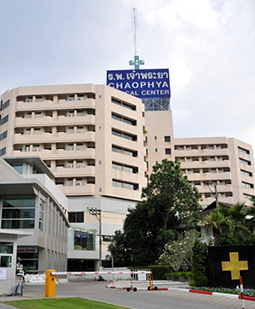
The Chaophya Hospital is a JCI accredited, tertiary private hospital in Bangkok, Thailand, which has been in operation since 1991. It has an international department which offers a comprehensive range of supporting services to foreign patients.
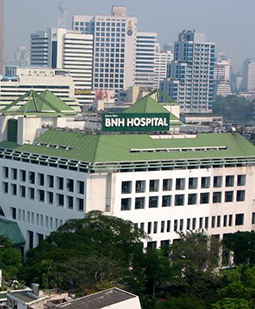
A JCI accredited hospital with a 225 in-patient bed capacity which offers a wide range of medical services. Services for international patients include aesthetic procedures and cosmetic surgery.
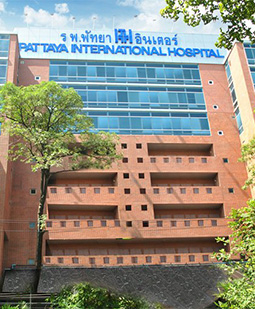
Pattaya International Hospital is one of Thailand’s most modern medical centers. It offers 80 inpatient beds, 24 hours emergency service, and a full range of advanced facilities, including intensive care, obstetrics, x-ray, laboratory, pharmacy...
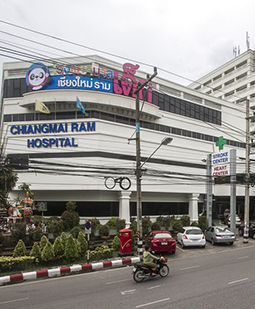
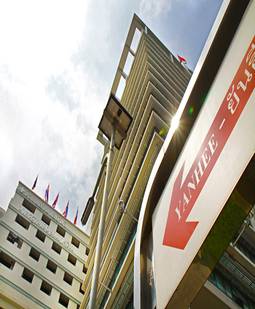
Being established in 1993, this tertiary private medical institution offers a wide range of medical care services. It has 350 in-patient bed capacity and is accredited by the Hospital Accreditation of Thailand.
What is Endoscopic Sinus surgery?
Endoscopic Sinus Surgery is a surgical procedure to remove unhealthy sinus tissue from the drainage channels, which helps in making way for the drainage of infected material from the sinus cavities. The surgery is mostly performed using endoscopic methods for improved and accurate view. Endoscopic nasal sinus surgery is done without external incisions and therefore there is very little bleeding, swelling and discomfort, which enables a fast recovery. Endoscopic sinus surgery does not damage healthy tissues, requires less time and yields good results. Nasal sinus surgery requires post-operative care, therefore follow-up and aftercare should be given essential attention.
How is Endoscopic Sinus Surgery performed?
A nasal endoscope is inserted through the nostrils into the nasal cavity. This allows the doctor to view the inside of the nose and sinuses.
The middle turbinate is located to identify and remove the uncinate process.
The ethmoid air cells are opened to improve ventilation, leaving the bone with the covering of mucous membrane.
Any blockage in the ostium, situated close to the jaw is removed with a meatal antrostomy.
The surgery helps to improve the ventilation of the sinuses by making the osteomeatal complex function better.
How to prepare for the Endoscopic Sinus surgery?
The patient’s medical history is reviewed by the doctor.
An ENT specialist will conduct diagnostic examination on the patient, which may involve fiberoptic endoscopy and CT scan.
The patient needs to avoid taking certain medication that may worsen bleeding. This includes herbs and vitamins.
The patient may be required to take antibiotics and steroids to reduce swelling.
Patients who smoke are advised to stop or reduce smoking to help in recovery.
The doctor should be informed if the patient has fever or any illness before the surgery.
Acerca de FESS
Datos clave para planificar su tratamiento: cuánto dura, la estancia en el hospital, la anestesia, los riesgos y la recuperación.
Duración de la cirugía/tratamiento
60 to 90 minutes
Días de hospitalización
Nasal sinus surgery is usually done as an outpatient procedure.
Anestesia
Local anesthesia with intravenous sedation
Recuperación
- The patient is taken to the recovery room where the patient’s vital signs are monitored.
- Moderate bleeding from the nose after the surgery is normal.
- The patient may vomit once or twice after the surgery.
- Swelling of the nose, around the eyes, and upper lip is noticed for several days.
- Complete recovery may take three to five days.
Riesgos
- Injury to the optic nerve, resulting in blindness
- Leakage of cerebrospinal fluid
- Orbital Hematoma
- Nasolacrimal duct stenosis
- Intracranial injury
- Smell and taste impairment
- Numbness
- Voice change
- Pain
- Nasal blockage
Cuidados posteriores
- The patient will not be able to drive after the surgery due to drowsiness and disorientation.
- The nose dressing should be changed regularly as it becomes wet.
- The patient may need to wear a nose pack for a few days
- The patient should avoid blowing the nose for about a week from the surgery.
- The patient should sleep with the head at an elevation.
- Pain medication should be taken only after consulting the doctor.
- The patient may need to use a saline spray for six to eight times a day to keep the nose moist.
- The patient should restrain from strenuous activities and physical recreational activities for a few weeks.
- Alcoholic beverages, caffeine, and spicy food should be avoided.
- Decongestant nasal sprays should not be used without consulting a doctor.
- Dairy products may cause excessive mucous formation and should therefore be avoided.
- The patient should avoid smoking and should drink a lot of water.
- The patient should take all medication prescribed by the doctor.
- A follow up appointment is scheduled a week after the surgery.

 Private Hospital
 JCI
 Thai HA
 ISO