Información clave para planificar fusión cervical en Corea del Sur.
$16,000 desdePrecio más bajo publicado
2–6 hDuración del procedimiento
3 hospitalesOfrecen fusión cervical
Fusión Cervical en Corea del Sur aparece desde US$16,000 hasta US$17,000 en 3 hospitales. La operación dura 2 a 6 horas. Cada hospital cotiza su propio precio para su caso.
Precios actualizados en nov 2018
Costo de Fusión Cervical en Corea del Sur
Tabla de precios por tipo de procedimiento, en US$. Cada hospital cotiza su propio precio para su caso.
Procedimiento
Precio mínimo
Precio máximo
Fusión Cervical
$16,000
$17,000
Precio desde $16,000 hasta $17,000 · actualizado en nov 2018.Cada hospital cotiza el precio final
Hospitales y clínicas que ofrecen Fusión Cervical en Corea del Sur
Fusión Cervical aparece en 3 hospitales en Corea del Sur. El orden cambia cada hora para que todos tengan la misma visibilidad.
The Samsung Medical Center plans to achieve medical innovation in the future to promote the happiness of patients and develop into a global hub of biohealth care study and link the industry by connecting to hospital-R&D Center-school and enterprises.
Yonsei University Health System (YUHS) was founded in 1885 as the first modern medical institution in Korea by the American medical missionary, Dr. Horace N. Allen.
What is Cervical Fusion?
Cervical fusion is a surgical procedure that joins bones located in the cervical spine, which may have been fractured or dislocated. It may also be used to treat problems that cause excessive pain from an infection or cancer.
How is Cervical Fusion Performed?
An anterior or posterior incision is made on the patient’s neck.
The cervical fusion may be performed in the following ways:
A bone graft can be used to connect adjacent vertebrae, which stimulates a new bone growth.
Metal implants and metal plates can be used to hold and join the vertebrae.
A complete vertebra can be taken out and the spine can be fused.
The adjacent vertebrae can be fused by removing a spinal disc.
How to Prepare for Cervical Fusion?
The patient needs to undergo a physical examination and certain tests before the surgery.
The doctor should be informed about any medication that the patient may be taking.
Certain medication that the patient has been taking may be stopped two weeks before the surgery.
The doctor should be informed about any medical conditions or ailments of the patient.
The doctor should be informed if the patient has been drinking more than one or two drinks of alcohol in a day.
The patient should stop smoking some weeks prior to the surgery to recover quickly.
The patient will meet an anesthesiologist before the surgery.
Acerca de Fusión Cervical
Datos clave para planificar su tratamiento: cuánto dura, la estancia en el hospital, la anestesia, los riesgos y la recuperación.
Duración de la cirugía/tratamiento
2 to 6 hours, depending on factors such as number of vertebrae, instrumentation, etc.
Días de hospitalización
Cervical fusion may be done as an outpatient procedure. If the patient is taken as an inpatient, the patient may be hospitalized for one day.
Anestesia
General Anesthesia
Recuperación
- The patient may feel tired, thirsty or cold after gaining consciousness.
- The patient may get a sore throat.
- The patient may experience pain or numbness or a tingling sensation due to irritation to the nerves from the surgery.
Riesgos
- Risks of general anesthesia
- Pain
- Blood clotting
- Stiff neck
- Breakage of fusion implants
- Injury to the nerves and spinal cord
- Excess bleeding
Cuidados posteriores
- Intravenous lines are used to provide the patient with medication and fluid.
- The patient should not bend and lift heavy objects. Walking may be permitted if the patient is comfortable.
- The doctor should be consulted before resuming sexual activity.
- The patient is required to wear cervical collars for approximately two months or until the fusion is done. An Aspen collar should be used continuously except when the patient is showering. A Philly collar should be used when the patient is showering.
- Drainage tubes may be attached to the patient’s body to drain fluid and blood from the surgical incision.
- The incision area should be kept dry and covered while showering.
- A catheter may be attached to the patient’s bladder to drain urine.
- The patient should fix an appointment with the doctor 10 to 14 days after the surgery. The doctor will examine the patient and remove any staples during this visit.
- The patient may be required to wear special stockings or boots to prevent blood clotting in the legs.
- The patient is required to use an incentive spirometer that is used to keep the lungs clear. The patient should not drive during the recovery period.
- Physical therapy may be started once the fusion is complete.
The doctor should be informed immediately if the following symptoms occur:
- High fever
- Swelling and infection in the incision area
- Arm or leg weakness
- Severe neck pain
 Private Hospital

 Samsung Medical Center
 ISOPrecio a consultar
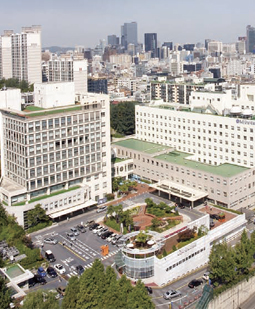 Yonsei University Health System, Severance Hospita