Información clave para planificar incubación asistida en Panamá.
$5,500 desdePrecio más bajo publicado
4 semDuración del procedimiento
3 hospitalesOfrecen incubación asistida
Incubación Asistida en Panamá aparece desde US$5,500 hasta US$6,500 en 3 hospitales. La operación dura 4 semanas. Cada hospital cotiza su propio precio para su caso.
Precios actualizados en may 2017
Costo de Incubación Asistida en Panamá
Tabla de precios por tipo de procedimiento, en US$. Cada hospital cotiza su propio precio para su caso.
Procedimiento
Precio mínimo
Precio máximo
Incubación Asistida
$5,500
$6,500
Precio desde $5,500 hasta $6,500 · actualizado en may 2017.Cada hospital cotiza el precio final
Hospitales y clínicas que ofrecen Incubación Asistida en Panamá
Incubación Asistida aparece en 3 hospitales en Panamá. El orden cambia cada hora para que todos tengan la misma visibilidad.
The clinic offers a range of fertility procedures: in vitro fertilization through a natural cycle, in vitro fertilization with laser assisted hatching, cryopreservation of embryos and oocytes, and pre-implantation genetic diagnosis.
Offers IVF and intracytoplasmic sperm injection procedures. Techniques such as day 3 Embryo Hatching, Embryo Glue, Blastocyst, and Cytoplasmic Transfer are a part of the standard service at no additional cost.
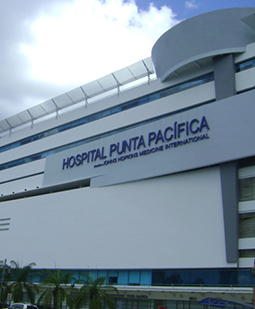
A modern private hospital which is affiliated with Johns Hopkins Medicine International. Most of the doctors and surgeons at Hospital Punta Pacifica were trained in the USA or in Europe.
What is Assisted Hatching?
Assisted hatching is used in the IVF procedure in order to increase the chances of pregnancy. Assisted hatching assists the embryo in hatching from the outer protective layer (called the zona pellucida) so it can implant itself on the womb’s wall. Assisted hatching makes a small hole in the protective layer of the embryo.
How is Assisted Hatching carried out?
IVF procedure is carried out and the fertilized egg – embryo – is incubated in a laboratory.
On the third or fourth day the embryo is held under a microscope and an acidic solution, laser or micro tool is applied to the outer layer (zona pellucida).
The acidic solution or laser/ tool creates a small hole in the outer layer of the embryo.
After being washed, the embryo is placed back in the incubator and transferred into the woman’s womb.
Who is a suitable candidate for Assisted Hatching?
Assisted hatching is most commonly used with IVF in the following cases:
women aged over 37
couples where the woman’s FSH level is high on day three of the menstrual cycle
couples who have poor quality embryos
couples who have had one or more failed cycles of IVF.
If only one embryo is available for transfer, assisted hatching is not usually carried out due to risk of damaging the only viable embryo.
What are the chances of success with Assisted Hatching?
IVF procedures using assisted hatching are believed to result in higher pregnancy rates, according to some clinicians. Others disagree, believing assisted hatching does not improve the chances of pregnancy.
According to the Human Fertilization and Embryology Authority, in 2006 the percentage of cycles of IVF or ICSI that received assisted hatching resulting in a live birth were as follows:
26 percent for women aged under 35
19 percent for women aged between 35-37
17 percent for women aged between 40-42
6 percent for women aged between 43-44
Acerca de Incubación Asistida
Datos clave para planificar su tratamiento: cuánto dura, la estancia en el hospital, la anestesia, los riesgos y la recuperación.
Duración de la cirugía/tratamiento
One full cycle of IVF, where assisted hatching takes place at the incubation stage, takes about 4 to 4 weeks to complete.
Días de hospitalización
None. IVF and assisted hatching procedures don’t require an overnight stay.
Anestesia
Egg collection in the IVF cycle may take place under sedation or a general anesthesia.
Recuperación
Información próximamente. Pida una consulta para recibir orientación personalizada sobre la recuperación. Pedir presupuesto →
Riesgos
- Damage to the embryos.
- Multiple births and increased likelihood of identical twins.
- Negative reaction to fertility drugs.
- Cramps and bleeding following egg collection.
- Ovarian hyper-stimulation syndrome.
Cuidados posteriores
- Take antibiotics, if prescribed, to lessen the chances of infection.
- Ease cramps following egg collection with pain killers.

 Fertility Clinic

 JCI