Información clave para planificar angioplastía coronaria en México.
$9,200 desdePrecio más bajo publicado
1–2 hDuración del procedimiento
11 hospitalesOfrecen angioplastía coronaria
Angioplastía Coronaria en México aparece desde US$9,200 hasta US$13,500 en 11 hospitales. La operación dura 1 a 2 horas. Cada hospital cotiza su propio precio para su caso.
Precios actualizados en may 2010
Costo de Angioplastía Coronaria en México
Tabla de precios por tipo de procedimiento, en US$. Cada hospital cotiza su propio precio para su caso.
Procedimiento
Precio mínimo
Precio máximo
Angioplastía Coronaria
$9,200
$13,500
Precio desde $9,200 hasta $13,500 · actualizado en may 2010.Cada hospital cotiza el precio final
Hospitales y clínicas que ofrecen Angioplastía Coronaria en México
Angioplastía Coronaria aparece en 11 hospitales en México. El orden cambia cada hora para que todos tengan la misma visibilidad.
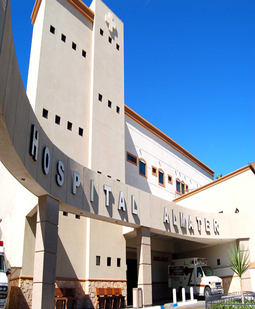
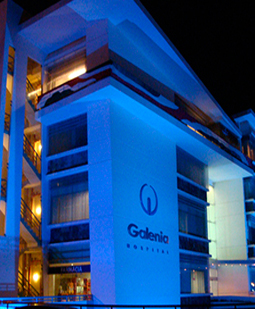
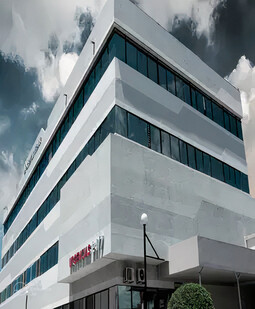
Welcome to our Private Hospital, where a friendly and courteous team of medical specialists with a wealth of scientific knowledge and ethical standards is committed to taking care of your healthcare needs. Our goal is to provide unmatched medical care by constantly innovating and investing in the tr
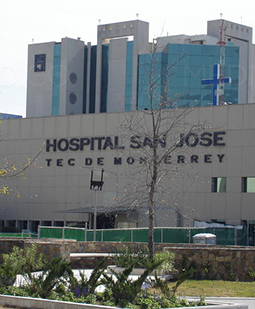
A JCI accredited hospital, located 150 miles from the border with Texas, United States. The hospital is a full range tertiary care hospital, with five areas of excellence: Cardiology, Oncology, Neuroscience, Organ Transplant and Liver Disease.
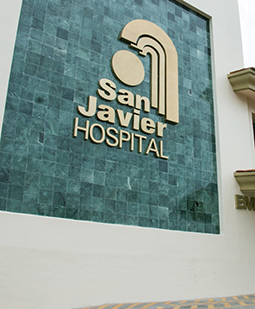
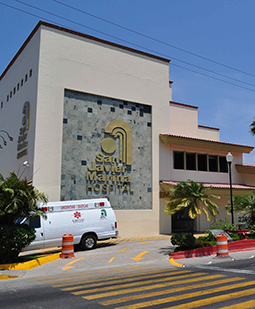
A 73 bed private, tertiary, full service hospital. San Javier Hospital is affiliated with 3,000 specialized, board certifies physicians, and offers the full range of medical specialties.
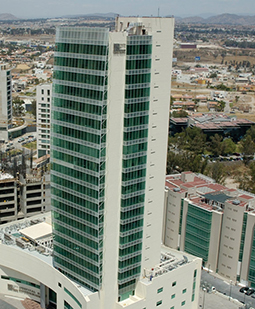
The Department of Cardiovascular Surgery is one of the leading institutions of its kind in Mexico. Minimally invasive techniques such as off-pump bypass surgery without using a heart-lung machine have been applied to many patients.
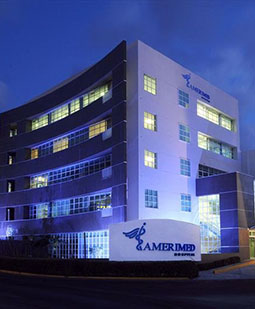
A tertiary, modern, small hospital, which is part of the San Javier group of hospitals. The hospital employs 48 physicians in most medical specialties, and provides many services to accomodate private and foreign patients.
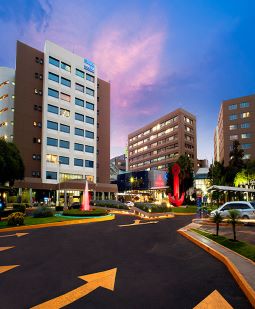
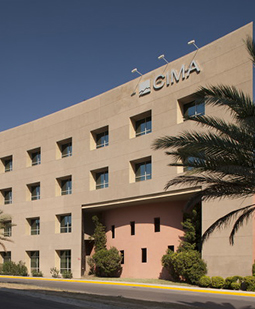
Hospital CIMA Monterrey is an acute-care hospital that was originally a women's specialty hospital (formerly known as Hospital Santa Engracia) when it opened in 1996. It is located in San Pedro, Garza Garcia, a suburb of Monterrey, in Mexico.
What is Coronary Angioplasty?
Coronary angioplasty is a surgical procedure that is used to open coronary arteries that are blocked. The blood flow to the heart is improved after coronary angioplasty.
Coronary angioplasty helps in improving symptoms of coronary heart disease such as chest pain, discomfort, and short breath. It also reduces chances of heart attacks caused by blockage in the coronary artery. The blockage is usually caused by a blood clot that develops in the area where the plaque has formed. The formation of plaque is caused by fatty substances that narrow the arteries.
How is Coronary Angioplasty Surgery Performed?
Coronary angioplasty is usually performed in a catheterization laboratory.
The patient is given heparin to stop blood clotting.
A small incision is made in the patient’s wrist or groin.
Then, a catheter is inserted through the incision into the artery.
A contrast, which is a special dye, is injected into the artery through the catheter. The contrast is a colorless liquid that contains iodine that is visible on an X-ray.
The blockage in the artery is visible with the help of the contrast. The patient may feel a warm sensation when the contrast is injected.
Subsequently, a wire is inserted into the catheter and to the blocked area of the artery.
A small balloon, measuring approximately 2cm by 3 mm in diameter, is inserted along with the wire and placed across the blockage.
The balloon is slowly inflated causing the artery to widen up and allowing easy blood flow. At this moment, the patient may feel some chest pain.
A stent, which is a tiny wire mesh tube, may be inserted and placed in a collapsed form. When the balloon is inflated, the stent fits in the artery in an expanded form.
After this, the balloon is deflated and withdrawn together with the wire and catheter. If the stent is placed, it is left inside the artery.
Once the catheter is removed, the incision site is firmly pressed for approximately 20 minutes. This is done to ensure that the artery is closed and bleeding is stopped.
The incision site is sealed with an Angioseal.
If the incision is at the groin, a tube may be left for a few hours to allow any heparin to disappear.
If the incision is at the wrist, a firm band is fixed over the artery for some hours.
How to Prepare for Coronary Angioplasty?
The patient should stop smoking as it causes more risks of artery blockage and slows the recovery process.
The patient should not eat or drink anything for about four hours before the surgery.
The doctor may ask the patient to stop taking certain medications a few days before the surgery.
The patient needs to undergo a physical examination and some blood and urine tests before the surgery.
The doctor may also recommend electrocardiogram and a chest X-ray.
Acerca de Angioplastía Coronaria
Datos clave para planificar su tratamiento: cuánto dura, la estancia en el hospital, la anestesia, los riesgos y la recuperación.
Duración de la cirugía/tratamiento
1 to 2 hours
Días de hospitalización
Overnight or one day stay at the hospital
Anestesia
Local anesthesia
Recuperación
- The patient is kept in a special care unit after the surgery for a few hours or overnight.
- The patient should lie still for a few hours to allow the artery to be closed completely.
- The patient’s heart rate and blood pressure are monitored.
- The site where the catheters were inserted may feel sore for a week after the surgery.
- The patient can resume normal activities after a week.
- Medication may be provided to help patients relax and prevent artery spasms.
Riesgos
- Chest pain and discomfort for a few hours after the surgery.
- Bruising and pain at the incision site.
- Bleeding from the artery
- Narrowing of the arteries that are treated with a stent
- Allergic reaction to the contrast material, causing rash, swelling or breathing difficulty
- Blockage of the coronary artery during the procedure
- Displacement of a blood clot or blockage material by the catheter, which may block the artery and cause heart attack or stroke
- Injury to the artery
Cuidados posteriores
- The patient needs to avoid heavy physical activity for many days after coronary angioplasty surgery.
- The patient should not lift heavy objects and involve in strenuous activities for a week after the surgery.
- Sports should be avoided for about two weeks after the surgery.
- If the patient has a stent placed during the surgery, an anticoagulant may be required for about one year.
- Dental procedures may also need to be avoided to prevent endocarditis.
The patient needs to make some lifestyle changes such as
- Dietary changes
- Stopping Smoking
- Physical exercises
- Weight reduction
- Stress control
- Cardiac rehabilitation
The patient should contact the doctor immediately if the following symptoms are detected:
- Fever
- Weakness
- Breath shortness
- Chest pain
- Change in color or temperature of the limbs that were used during surgery

 Private Hospital
 JCIPrecio a consultar